
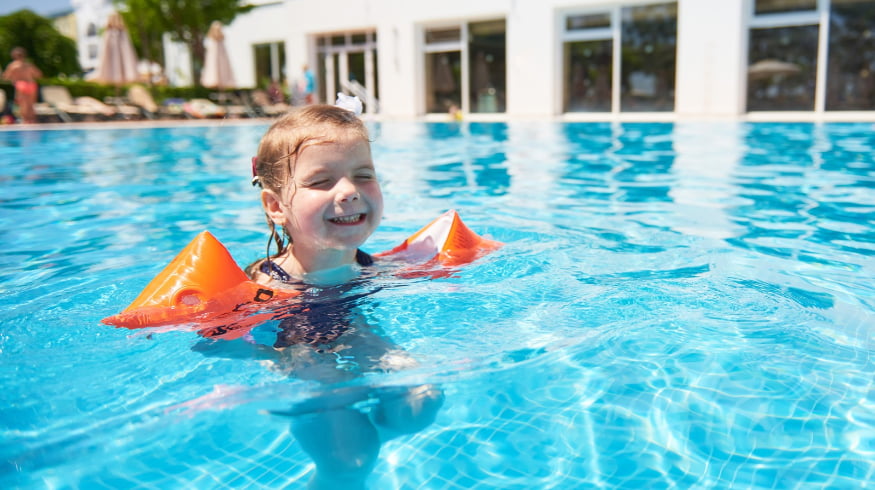
Sunny days, outdoor living and family time by the pool are some of the best parts of life in the UAE. For many families in Dubai and Abu Dhabi, a private or community pool is part of everyday life, a place where children splash, play and grow more confident in the water.
A pool also brings real responsibility.
Drowning can happen quickly and quietly, especially with young children who don’t yet understand the danger. Even shallow water can be a risk, which is why children need close supervision whenever they’re near it.
The good news is that a few simple, consistent steps make pool time much safer. Secure barriers, clear household rules and well-prepared caregivers all help children enjoy the water while you keep the risks in check.
This guide covers practical pool safety for families in the UAE: childproofing your villa, supervising effectively, preparing your nanny, and teaching children rules they’ll remember.
1. Physical Barriers and Childproofing Your Pool
One of the most important steps in pool safety is stopping children from reaching the water without an adult. Supervision comes first, but physical barriers add a vital extra layer of protection.
Install a Secure Pool Fence
A well-installed fence separates the pool from the house and the rest of the garden. When choosing a childproof pool fence, look for:
- A fence that meets local safety requirements.
- A self-closing, self-latching gate that children can’t easily open.
- A latch placed well out of a young child’s reach.
- No footholds, gaps or nearby furniture that could help a child climb over.
Test the gate regularly to make sure it closes and latches every time. A secure fence matters most for toddlers, who are naturally curious and can wander off in seconds. Check with your community or local authority before installing one.
Add a Safety Cover and Pool Alarm
A proper safety cover adds another barrier when the pool isn’t in use. Choose one designed for child safety, not a floating or solar cover. A child can slip underneath those.
Pool alarms can alert you to unexpected movement in the water or at the gate. Covers and alarms are useful backups, but they don’t replace a fence or active supervision.
Secure Doors and Windows Leading to the Pool
Many UAE villas have sliding glass doors that open straight onto the garden or pool. Fit child-resistant locks or secondary latches and keep these doors closed and locked whenever no one is supervising the pool area.
Make it a habit to check all garden doors before bed and whenever you leave the house.
Don’t Forget Other Water Hazards
Pools aren’t the only risk. Young children can drown in just a few centimetres of water. Empty paddling pools and buckets after use, never leave a child alone in the bath, and fence off or cover garden water features and fountains.
Parent tip: Pool safety works best in layers. Secure barriers, controlled access, clear rules and close supervision together offer far more protection than any one measure on its own.
2. Active Supervision and the Water Watcher System
Even with the best equipment, children always need to be watched around water. They move quickly, and a moment’s distraction is all it takes.
Know What Drowning Really Looks Like
Drowning rarely looks like it does in films. There’s usually no splashing, waving or shouting. A child in trouble often slips under the surface silently, sometimes within seconds and sometimes just metres from adults.
That’s why “nearby” isn’t enough. Supervision needs eyes on the water.
Give Children Your Full Attention
Active supervision means watching children continuously, not just being in the same area. While children are in or near the pool, the supervising adult shouldn’t be:
- Scrolling, texting or taking calls.
- Reading or working.
- Doing household chores.
- Assuming another adult is watching without checking.
- Leaving children alone, even for a moment.
If the supervising adult needs to step away, another responsible adult must take over first.
Use a Water Watcher System
Family gatherings, birthday parties and weekend visits make supervision harder. When lots of adults are around, it’s easy to assume someone else is watching.
A Water Watcher system makes it clear who is responsible at any moment:
- Assign: Choose one adult before children enter the pool.
- Identify: Give them a Water Watcher card or wristband as a visible reminder.
- Focus: They watch the children and the water, and nothing else.
- Hand over: They pass responsibility directly to another capable adult, and the card or wristband goes with it.
Your nanny can take on this role if it’s agreed in advance. If they do, they should be free from other tasks while they’re on watch.
Keep Babies and Non-Swimmers Within Arm’s Reach
Babies, toddlers and children who aren’t confident swimmers need especially close supervision. An adult should stay within arm’s reach whenever they’re in or near the water, close enough to grab them instantly.
Swimming lessons and armbands don’t make a child drown-proof. Strong swimmers still need watching.
Supervising at Community and Compound Pools
Many families use shared pools in their community or compound. A lifeguard on duty doesn’t replace your own supervision, because they’re watching everyone, not just your child. Check the pool’s rules and opening hours and treat it as you would your own pool: one named adult, eyes on the water.
Keep Cool in the Heat
UAE summers bring their own risks. Plan swims for the early morning or late afternoon, make sure there’s shade at the poolside, and keep everyone drinking water. A tired, overheated child is more likely to get into difficulty in the water.
3. Preparing Your Nanny and Caregivers
For many UAE families, nannies play a big role in daily childcare. If your caregiver will be around the pool, water safety needs to be part of their role from the start.
Agree on Pool Access and Responsibilities
Before any swimming happens, agree on when children can use the pool, who supervises them, and what to do in an emergency. Don’t assume your nanny knows your expectations. Talk them through together.
Check First Aid and CPR Training
Even with every precaution in place, accidents can still happen. A caregiver trained in Paediatric First Aid and CPR can respond quickly and correctly while help is on the way. When hiring a nanny in the UAE, ask about:
- Current Paediatric First Aid certification.
- CPR training that covers both infants and children.
- How they would respond in a water emergency.
- Their understanding of your household pool rules.
- Their willingness to follow your supervision arrangements.
Parents should consider taking a Paediatric First Aid and CPR course too. In an emergency, the more adults in the house who know what to do, the better.
Prepare a Clear Emergency Plan
Every home with a pool needs an emergency plan that all adults and caregivers know well. Keep this information displayed near the pool:
- Ambulance: 998. For police, call 999.
- Your full villa address and community name.
- Directions to your property entrance for emergency responders.
- Where the first aid kit is kept.
- Simple steps for calling for help and giving first aid.
Keep rescue equipment by the pool too, such as a reaching pole or ring buoy. Adults can then help a child from the edge without putting themselves at risk.
If a child is unresponsive or not breathing normally after a water incident, call 998 immediately and follow the dispatcher’s instructions, including starting CPR if you’re able.
Make sure your nanny can tell responders exactly where your home is and how to get in, including gate codes or security details.
Back Your Caregiver When They Enforce the Rules
Children don’t always welcome rules, especially when they’re excited to swim. Make it clear that your nanny has your full support to stop unsafe behaviour, even if the children protest. Agree on household rules such as:
- No entering the pool without the supervising adult.
- No swimming when no one is available to supervise.
- No running or pushing around the pool.
- No leaving the pool area without telling the supervising adult
- No changing. supervisors without a direct handover.
When parents and caregivers enforce the same rules, children understand them more quickly and follow them more consistently.
4. Water Safety Rules Every Child in the UAE Should Learn
Start teaching water safety early, using simple words that suit your child’s age. The aim is to build good habits, while remembering that keeping children safe is always the adults’ responsibility.
Rule 1: Never Go Near the Pool Without a Grown-Up
Teach children to ask permission and wait for an adult before going near or into the water, even for a quick dip.
Rule 2: Walk, Don’t Run
Wet tiles are slippery. Remind children to walk carefully around the pool, not to push others, and to save rough play for somewhere else.
Rule 3: Learn to Swim
Age-appropriate swimming lessons with a qualified instructor build water skills and confidence. Keep supervising closely, though, even once your child can swim.
Rule 4: Floats Are Toys, Not Safety Equipment
Armbands, rings and inflatables can deflate, slip off or tip over. They don’t replace supervision. If your child needs a life jacket, choose a properly fitted one designed for their size and activity.
Rule 5: Shout for a Grown-Up if Someone Is in Trouble
Teach children to call an adult straight away if a sibling or friend falls in or seems to be struggling, and never to jump in to help themselves.
Make Safety Part of Everyday Family Life
Consistency helps children know what’s expected. Parents and caregivers should use the same short phrases every time, like “Stop at the gate,” “Wait for a grown-up” and “Walking feet by the pool.”
Go over the rules before swimming starts, not once children are already in the water.
The CloudNine Kids Commitment to Child Safety
Choosing childcare means trusting someone with your child’s well-being. Whether you need a babysitter, regular childcare or help during a family event, you should feel confident that safety comes first.
At CloudNine Kids, we provide trusted childcare services in dubai and Abu Dhabi, pre-screening all our professionals and requiring mandatory Paediatric First Aid certification. We encourage parents to share their safety requirements before every booking, including:
- Whether children are allowed in or near the pool during the booking
- Who will be responsible for supervision
- Your household water safety rules
- Where emergency contacts and first aid supplies are kept
Make sure the caregiver’s training and experience match the responsibilities you’re asking them to take on.
A trained, attentive caregiver can enforce your rules, supervise children as agreed and support safer play. They work best alongside secure barriers, clear responsibilities and a home that’s ready for emergencies.
At CloudNine Kids, we believe good childcare is about more than keeping children busy. It’s about giving them space to learn, explore and grow, with their safety always first.
Frequently Asked Questions About Pool Safety for Children in the UAE
How can I make my villa pool safer for toddlers?
Install a secure pool fence with a self-closing, self-latching gate. Lock doors leading to the garden and add a child-safety cover or pool alarm as a backup. Most importantly, make sure an adult is actively supervising whenever children are near water.
Is a pool fence enough to keep children safe?
No. A fence is an important barrier, but it works best alongside secure doors, active supervision and consistent household rules.
Can my nanny supervise my child in a private pool?
Yes, if responsibilities are clearly agreed and your nanny is properly prepared. Discuss their first aid and CPR training, when swimming is allowed, your child’s swimming ability and your emergency plan.
What is the ambulance number in the UAE?
Call 998 for an ambulance. Keep the number displayed near the pool, and make sure every adult and caregiver knows your full address.
Are swimming lessons enough to prevent drowning?
No. Lessons build water skills, but they don’t remove the risk. Children still need secure barriers, close supervision and consistent safety rules.
Final Thoughts: Make Pool Safety a Family Priority
A pool can be one of the best parts of family life in the UAE. With the right precautions, it’s a place where children can splash, play and build confidence safely.
Start with the essentials: secure the pool, control access, assign a Water Watcher and make sure everyone knows the rules. Review these regularly and make sure every nanny or babysitter knows exactly what’s expected.
Above all, remember that nothing replaces active adult supervision around water.
Need childcare support in Dubai or Abu Dhabi? Get in touch with CloudNine Kids to find trusted, first-aid-trained caregivers who fit your family.

Angelica Robinson
CEO & Childcare Director


